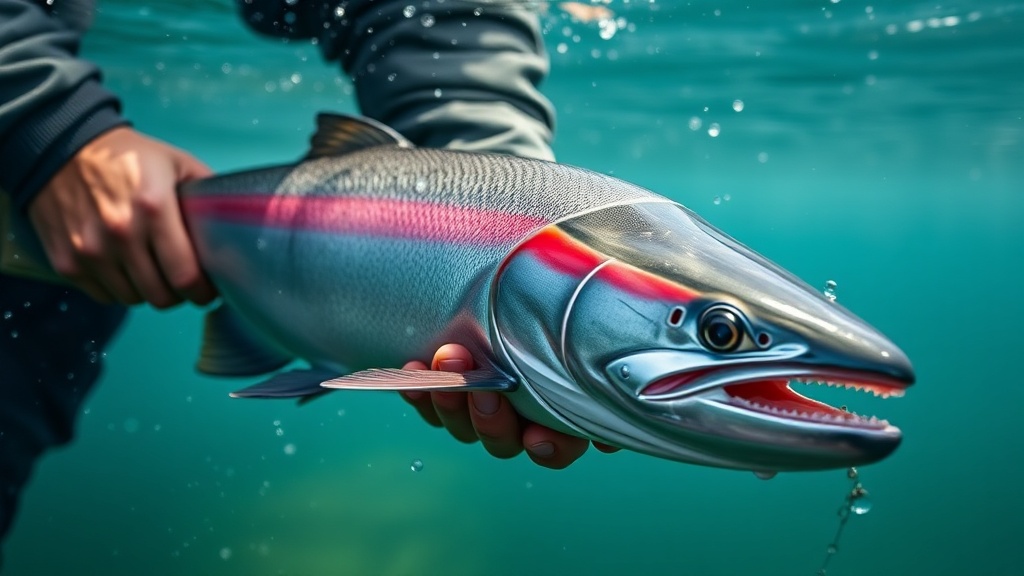
How to Catch Chinook Salmon in Port Alberni: A Complete Beginner's Guide

What This Guide Covers
This guide breaks down everything needed to catch Chinook salmon in Port Alberni—from understanding seasonal runs to picking the right gear, reading water conditions, and choosing between the Somass River, Sproat Lake, and the Alberni Inlet. Port Alberni sits at the heart of one of British Columbia's most productive Chinook fisheries. Whether casting from shore or trolling deep water, the techniques here will save time, money, and frustration.
When Is the Best Time to Fish for Chinook in Port Alberni?
The peak Chinook season runs from late May through September, with distinct runs creating multiple windows of opportunity. Early season fish—often called "springs" by local anglers—start showing in the Alberni Inlet in late May and early June. These are typically feeder Chinook, aggressive and willing to bite, averaging 15 to 25 pounds.
The main event arrives in August and September. That's when the mature Chinook—"hooknoses" and "blues"—return to the Somass River system to spawn. These fish push 30 to 50 pounds, with the occasional monster exceeding 60 pounds. The 2023 season saw a particularly strong return, with the Department of Fisheries and Oceans reporting improved escapement numbers for the Somass stock.
Here's the thing: timing matters more than technique. A mediocre angler in August will outfish an expert in October. The salmon simply aren't there once the run ends. Worth noting—river closures and retention restrictions change annually, so checking current regulations before heading out is non-negotiable.
What Gear Do You Need for Port Alberni Chinook?
The right setup depends entirely on where and how you plan to fish. Trolling in the Alberni Inlet demands heavy-duty equipment capable of handling deep water and strong currents. Bank fishing on the Somass requires lighter, more sensitive gear.
Trolling Setup for the Inlet
A 9 to 10-foot medium-heavy salmon rod paired with a high-capacity conventional reel gets the job done. The Okuma Cold Water CW-453D holds 300 yards of 30-pound braided line—plenty for downrigger work. Speaking of which, downriggers are practically mandatory for inlet fishing. The Scotty 1106 electric downrigger allows precise depth control from 50 to 150 feet, right where Chinook hold in summer.
Lure selection is straightforward. Anchovies in clear or chartreuse teaser heads produce consistently. Hot Spot flashers—particularly the UV Green Onion pattern—trigger reaction strikes when trolled 20 to 40 inches ahead of the bait. Plug-cut herring also works, though it's messier and requires more frequent re-rigging.
Bank Fishing Setup for the Somass River
River anglers should scale down. An 8'6" medium-action spinning rod (the Lamiglas X-11 is a solid choice) spooled with 15-pound monofilament offers the sensitivity needed to detect subtle bites. Bobber-dogging—drifting a bait beneath a float—is the dominant technique from August through October.
Roe (salmon eggs) reigns supreme for bait. Fresh, uncured roe outperforms the store-bought stuff every time. Local tackle shops like Somass Gas & Tackle on River Road often carry fresh roe when available. If not, single eggs or small clusters of Pautzke BorX O Fire cured eggs work as backup.
| Technique | Best Location | Prime Months | Key Gear |
|---|---|---|---|
| Downrigger Trolling | Alberni Inlet | June–September | Scotty 1106, anchovy, flashers |
| Bobber-Dogging | Somass River | August–October | Float, roe, 15-lb mono |
| Plug Fishing | Somass River | September–October | Brad's Killer Fish, Mag Lip 4.0 |
| Jigging | Sproat Lake | Year-round | 1-oz Gibbs Minnow, fish finder |
Where Are the Best Fishing Spots Around Port Alberni?
The three main systems—the Alberni Inlet, Somass River, and Sproat Lake—each offer distinct Chinook experiences. Picking the right water on the right day separates successful anglers from those going home skunked.
The Alberni Inlet
This 35-kilometer fjord connects Port Alberni to the Pacific Ocean. Depths exceed 300 meters in places, creating a highway for migrating salmon. The "Big Bank" area—roughly halfway between the harbor and the mouth—holds Chinook throughout summer. GPS coordinates vary by season, but generally, anywhere you find bait balls (herring or needlefish) on the sonar, Chinook won't be far behind.
The catch? Weather. The inlet funnels wind, and afternoon breezes can turn 2-foot swells into dangerous conditions fast. Morning trips—launching from Somass Marina or Clutesi Haven Marina—offer calmer water and more active fish.
The Somass River
Once Chinook hit freshwater, behavior changes dramatically. They stop feeding aggressively and become territorial, striking out of aggression rather than hunger. The river below Stamp Falls—particularly the stretch from the paper mill down to the tidal flats—concentrates fish during peak run times.
Public access points include the Redford Street bridge area (locally called "the papermill"), Robertson Creek (site of the hatchery), and various spots along the Wilderness Trail that parallels the river. The Stamp River confluence creates a natural bottleneck where fish pause before pushing upstream—this is prime real estate in September.
Sproat Lake
Landlocked Chinook (yes, they exist) cruise Sproat Lake's depths year-round. These fish don't grow as large as their ocean-run cousins—20 pounds is exceptional—but they fight harder pound-for-pound. Jigging in 80 to 120 feet of water near the Taylor Arm area produces consistently. A fish finder is mandatory here; without it, you're fishing blind in featureless water.
What Regulations Should You Know?
Chinook regulations in Area 23 (Port Alberni) change annually based on stock assessments. For 2024, retention limits in the Alberni Inlet allow two Chinook per day with a maximum size restriction (often 67 cm or 80 cm depending on specific sub-areas). The Somass River typically operates under more restrictive rules—often catch-and-release only or single-barbless hooks required.
All anglers need a valid Tidal Waters Sport Fishing License for inlet fishing or a Basic Angling License for freshwater. Salmon conservation surcharges and classified waters stamps may apply. The BC Freshwater Fishing Regulations website provides current details, but local tackle shops usually have the most up-to-date word on river conditions and emergency closures.
That said, regulations exist for a reason. The Somass Chinook stock supports both recreational and First Nations fisheries, plus commercial interests. Respect the rules, handle fish carefully, and consider releasing larger breeders—even if retention is allowed.
What Common Mistakes Should Beginners Avoid?
Newcomers to Port Alberni Chinook fishing make predictable errors. Recognizing them early saves fish—and dignity.
Fishing too shallow. In the inlet, Chinook hold deep. If your downrigger ball isn't bouncing bottom occasionally, you're probably not deep enough. These fish follow temperature breaks and bait schools, often 80 to 150 feet down in mid-summer.
Ignoring tide charts. Tides matter enormously in the inlet. The outgoing tide concentrates bait and predators near the surface layers. The Port Alberni tide tables should inform every trip plan.
Using the wrong hooks. Barbed hooks kill fish unnecessarily. Single barbless hooks are required in many areas and simply ethical practice everywhere else. Crimp those barbs.
Under-preparing for weather. Port Alberni's "rain shadow" reputation is misleading. The inlet creates its own weather. A 15-knot wind against a strong ebb tide builds steep, dangerous chop. Check marine forecasts, not just the city weather report.
Here's the thing about Chinook fishing: patience beats flash. The anglers catching consistently aren't using secret lures or magic spots. They're putting in hours, adjusting depth and speed methodically, and paying attention to what the water tells them. The fish are there—Port Alberni's Chinook runs have sustained generations of anglers. Learn the fundamentals, respect the resource, and the rewards follow.
"There's no such thing as a bad day on the water. But some days, the Chinook make it unforgettable."
Steps
- 1
Book a Local Fishing Charter or Prepare Your Boat
- 2
Time Your Trip During Peak Salmon Season (May-September)
- 3
Master Trolling Techniques with Herring or Spoons