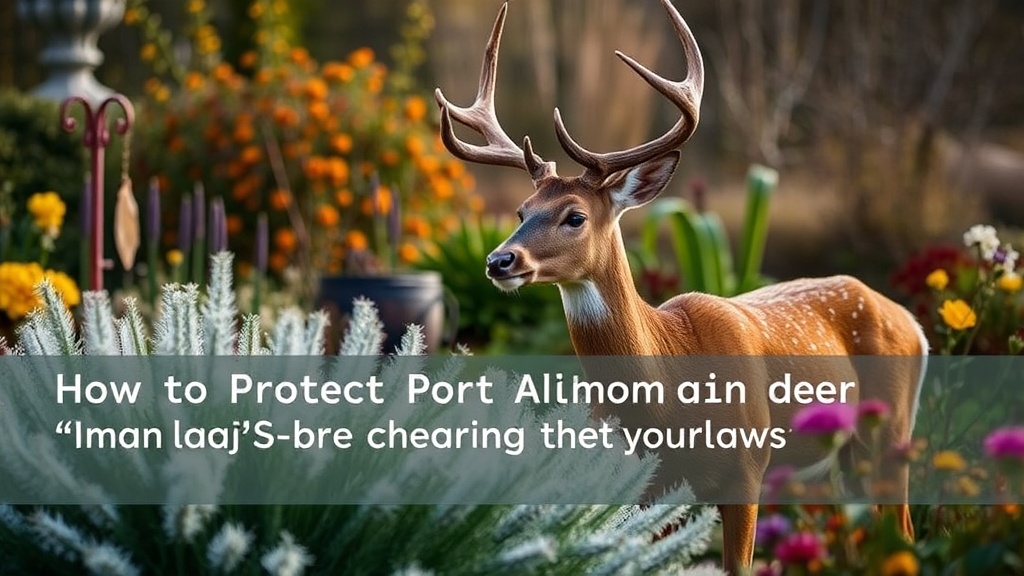
How to Protect Your Port Alberni Garden from Deer Without Breaking Local Bylaws

Many newcomers to Port Alberni assume deer are charming wildlife neighbors — something to photograph for social media or tolerate as a minor inconvenience. That illusion shatters the first morning you find your vegetable garden stripped bare or your fruit trees' bark shredded. Living alongside deer in our valley community isn't about coexistence; it's about defending your property within the strict boundaries of municipal bylaws and provincial wildlife regulations. The City of Port Alberni doesn't manage deer populations, and provincial conservation officers won't intervene unless an animal poses immediate danger. You're on your own — but that doesn't mean you're without options.
Why Are Deer Such a Persistent Problem in Port Alberni?
Our geography makes Port Alberni a perfect deer habitat — we're tucked between mountains and water, with the Somass River corridor providing cover and travel routes right through residential areas. The former forestland that became neighborhoods like those along 10th Avenue and the Johnston Road corridor still holds the scent trails and feeding patterns deer followed decades ago. Black-tailed deer don't recognize property lines — they recognize food sources, and our well-watered gardens are buffet tables compared to the surrounding second-growth forest.
The problem intensifies in late summer and fall when natural forage dries up. That's when you'll spot deer families brazenly walking down Redford Street at dawn or napping in yards near École John Howitt Elementary. We've all had that moment — stepping outside with coffee in hand, staring at a doe and her fawns parked on the lawn like they pay rent. In Port Alberni's temperate climate, deer activity continues year-round; they don't migrate, and they have excellent memories. Once they identify your yard as a food source, they'll return daily — crossing busy streets, jumping obstacles, and teaching their offspring to do the same.
What Bylaws Govern Fencing and Barriers in Port Alberni?
Before you dig post holes along your frontage, you need to understand the City of Port Alberni's zoning regulations — specifically, fence height restrictions in residential zones. The municipal code typically limits front yard fences to 1.2 metres (about 4 feet) without a permit. Side and rear yards often allow up to 1.8 metres (6 feet), but anything taller requires approval. Here's the frustration: deer can clear 2.4 metres (8 feet) from a standing jump. A standard 6-foot privacy fence won't stop them — it'll just be an obstacle they clear with contempt.
The city does allow "deer fencing" permits for agricultural properties and some larger lots, but standard residential lots in areas like Maquinna or South Port Alberni face strict aesthetic and height enforcement. You can't just string up industrial mesh and call it done — not without bylaw officers knocking. Temporary solutions like motion-activated sprinklers, netting, and repellent sprays fall outside fence bylaws and offer your best legal first line of defense. Talk to staff at local garden centers like Walker's Home Hardware Building Centre or the nursery sections of Canadian Tire on 3rd Avenue — they'll confirm what works in our specific coastal climate without drawing municipal attention.
Which Deterrent Methods Actually Work for Port Alberni Properties?
Physical barriers that work in deer territory are expensive and ugly — but necessary. For vegetable gardens, consider building raised beds with removable wire mesh cages. For individual trees, use corrugated plastic tree guards that extend at least 1.5 metres up the trunk (deer stand on hind legs to reach). The key is adapting to our wet climate: metal mesh rusts faster here than elsewhere on the Island, so UV-resistant plastic or galvanized hardware cloth lasts longer.
Repellents are hit-or-miss in Port Alberni's frequent rain. Egg-based sprays wash off quickly — you'll be reapplying weekly during our wet springs. Switch to blood meal or bone meal fertilizers around ornamentals; they're less odorous to humans but signal predator activity to deer. Motion-activated sprinklers work well until temperatures drop near freezing — which happens more often here than in Victoria or Nanaimo. Place them strategically covering approaches from known deer corridors (usually the greenbelt edges toward Roger Street and the riverbanks). Electric fencing is effective for large properties but requires maintenance and careful placement away from public areas — check with the City of Port Alberni's planning department before installing anything that could affect sidewalk access.
When Should You Contact Authorities About Problem Deer?
There's a threshold where backyard deer become community safety issues. The BC Conservation Officer Service handles aggressive wildlife — deer that charge dogs, corner residents, or show no fear of humans. Don't call them for garden raids; do call the RAPP line (1-877-952-7277) if a deer appears injured, sick, or unusually aggressive. In Port Alberni, we're also seeing increased human-deer conflicts near schoolyards and playgrounds — areas where habituated deer lose their natural wariness.
The North Island Wildlife Recovery Centre in nearby Errington (a reasonable drive from Port Alberni) handles injured deer, but they don't remove healthy animals from private property. Your local option for injured urban wildlife is the BC SPCA Alberni-Clayoquot branch — though their capacity is limited. Most importantly, never feed deer intentionally. It's against provincial regulations and creates the exact habituation problems that end with animals being destroyed. We've seen well-meaning residents on 4th Avenue and around Kitsuksis Drive leaving out apples or corn — this doesn't help wildlife; it creates dangerous, aggressive animals that lose their ability to forage naturally.
How Can Port Alberni Neighbours Work Together on Deer Management?
Individual yard defenses fail when your neighbors maintain deer buffets. In Port Alberni's tight-knit neighborhoods — especially in the flats near Victoria Quay and the older homes around Echo Centre — coordinated landscaping makes a difference. Talk to your neighbors about removing invasive English ivy (a major winter food source), planting deer-resistant native species like Oregon grape or salal, and agreeing on consistent deterrent use. The City of Port Alberni offers information on wildlife-resistant landscaping through their environmental services, though enforcement remains limited.
Consider joining or starting a local neighborhood association to address deer collectively. Groups in Cherry Creek and Beaver Creek have successfully lobbied for better garbage can enforcement (deer knock over bins for food scraps) and community education about not feeding wildlife. The BC Conservation Officer Service provides free resources for communities dealing with urban deer — including Port Alberni-specific conflict reduction strategies. Working together beats working alone; a deer excluded from three consecutive yards is more likely to move back to forested areas than one finding sporadic access.
Living with deer in Port Alberni requires persistence, creativity, and acceptance of imperfect solutions. Your roses will get nibbled. Your dog will bark at 6 AM. You'll spend more on fencing than you planned. But with smart planning — respecting bylaws, using proven physical barriers, and coordinating with neighbors — you can maintain a garden that feeds your family rather than the local deer population. The alternative is surrender: watching black-tails dictate what you can grow in your own yard. That's not the Port Alberni way — we're practical, resilient, and stubborn enough to outlast any four-legged forager.