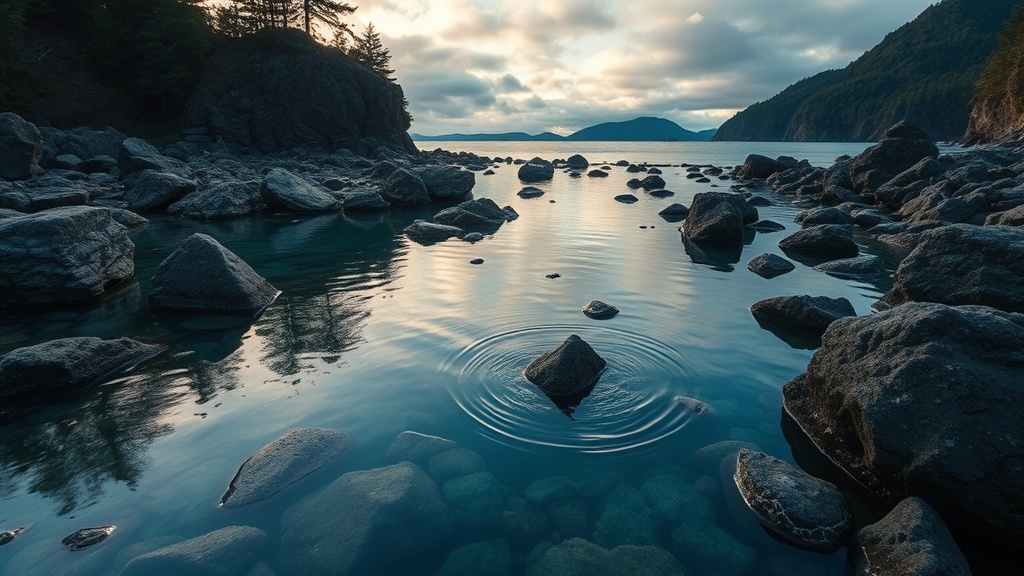
Preparing for a Successful Day of Tide Pooling at Barkley Sound

A single square meter of a rocky intertidal zone in Barkley Sound can host more than 1,000 individual living organisms. This post details exactly how to prepare for a tide pooling excursion along the West Coast of Vancouver Island, covering gear selection, safety-specific timing, and the local etiquette required to protect our coastal ecosystems. If you want to see sea stars, anemones, and crabs without getting soaked or stuck in the mud, you need a plan.
When is the Best Time to Go Tide Pooling?
The best time to go tide pooling is during a low tide, specifically during the two hours before and after the lowest point of the tide. You'll want to check the tide tables for Barkley Sound before you even leave your house in Port Alberni. If you show up at high tide, you'll just be looking at a wall of water and a very wet pair of boots.
Don't just look at the high and low marks. You need to look at the "amplitude"—the difference between high and low. A massive tidal range means the water moves fast. If the tide is coming back in, you need to be mindful of how quickly that water can reach your ankles. It happens much faster than most people realize.
I always recommend checking the lunar cycle too. Spring tides—which happen during a new moon or a full moon—bring much more dramatic water movement and expose more of the seabed. These are the days when the best stuff is revealed, but they are also the days when the currents are most aggressive.
What Gear Do I Need for Tide Pooling?
You need footwear with excellent grip, waterproof clothing, and a way to see clearly into small crevices. Most people think they can just wear sneakers and a light jacket, but the rocks along the Pacific coast are often covered in slippery algae or hidden barnacles that can tear up your skin. It's a mistake you'll only make once.
Here is a breakdown of the essential gear for a successful outing:
| Item Type | Recommended Product/Gear | Why It Matters |
|---|---|---|
| Footwear | Rubberized hiking boots or wellington boots | Prevents slipping on wet kelp and keeps feet dry. |
| Hand Protection | Nitrile gloves or thick gardening gloves | Protects against sharp barnacles and stinging anemones. |
| Vision | A bright LED flashlight (like a Maglite) | Essential for seeing into dark crevices and under rock overhangs. |
| Outerwear | A breathable waterproof shell (e.g., Patagonia Torrentshell) | |
| Observation | A magnifying glass or a clear plastic container | Allows for closer viewing without touching the organisms. |
If you're planning on spending more than an hour on the rocks, I'd suggest a pair of high-quality neoprene gloves. The water temperature in Barkley Sound rarely stays "warm," even in the summer. Your hands will go numb quickly if you're poking around in cold pools. Also, bring a small, clear container. It's a great way to observe a crab or a sea urchin for a few seconds before gently returning it to the water.
One thing to note—don't forget a headlamp. Even if it's daytime, the shadows under the rock shelves are deep. A headlamp is better than a handheld flashlight because it keeps both your hands free to balance yourself on the uneven terrain.
How Do I Observe Marine Life Without Causing Harm?
You must observe with your eyes and never touch, move, or remove any living organism from its environment. The rule of thumb is "look, don't touch." Most of the creatures you find—like the purple sea urchins or the various species of anemones—are extremely sensitive to human touch and can be easily harmed by the oils on your skin or the physical pressure of your fingers.
The ecosystem in Barkley Sound is delicate. If you pick up a sea star to take a photo, you might be stripping away its protective coating or causing it to lose its grip on the rock. That's a death sentence for many species. Instead, try to get a close-up shot with your phone or camera without disturbing the habitat.
Here are the golden rules for ethical tide pooling:
- Never pick up an animal: If you must move something to see it better, do it underwater or with a gentle nudge of a stick—never your hands.
- Watch your step: Step on the bare rock, not on the kelp or the soft, muddy areas. Stepping on a sea anemone or a soft sponge can destroy years of growth.
- Leave it as you found it: If you move a rock to see what's underneath, put it back exactly where it was.
- No harvesting: Unless you have a specific, legal permit for scientific collection, leave everything exactly where it is.
It's easy to get carried away when you find something cool, like a bright orange sea star or a massive crab. But remember, we are guests in their home. The goal is to leave the area looking exactly like you found it. This is especially important as more people are discovering these spots along the West Coast.
Is It Safe to Tide Pool Alone?
It is significantly safer to go with a partner, especially if you are exploring more remote areas of the Barkley Sound coastline. While tide pooling is generally a low-risk activity, the terrain is inherently unpredictable. You might encounter slippery rocks, unexpected waves, or even small falls. Having a second set of eyes is a huge advantage when checking the tide or watching for changes in the water level.
The biggest danger isn't the animals—it's the environment. If you're out by yourself and you slip or twist an ankle, you're in a tough spot. The terrain is rugged, and cell service can be spotty once you move away from the main roads. If you are going out, tell someone exactly where you are going and when you expect to be back. It's a simple habit that can save lives.
If you've spent time learning to fish in Port Alberni, you already know that respect for the ocean is the baseline. The same applies here. The ocean doesn't care how much gear you have; it moves when it wants to move. Always keep an eye on the horizon and the water's edge. If the water starts rushing toward you, it's time to head back to higher ground immediately.
The weather on the West Coast changes on a dime. You might start your morning with bright sun and end it with a heavy mist or a downpour. Always pack a way to stay dry. A simple plastic bag for your electronics (like your phone or camera) is a cheap way to prevent a very expensive mistake.
The diversity of life you'll see is incredible. From the tiny nudibranchs that look like colorful slugs to the larger crabs scuttling through the kelp, there's always something new to find. Just stay focused on the observation, keep your movements slow, and respect the rules. That's how you have a successful day out in the sound.
Steps
- 1
Check the Tide Tables
- 2
Pack Your Gear
- 3
Respect the Wildlife